Showing posts with label International Events. Show all posts

Durban Report
Students from India at UNFCC COP 17

Student Delegation at Durban Climate Change Convention COP 17

Four Indian students were selected by Government of India, to participate in the 17th Conference of Parties of the United Nations Framework Convention on Climate Chang at Durban, South Africa, from 28 November to 9 December 2011. It was thought that Indian students would ably articulate the perspectives of the young generation from developing countries, with regard to issues of climate change, national development, lifestyles and consumption. This would also be a good way of sensitizing Indian children to the emerging international issues in climate change.

Process of Selecting the Student Delegation

The selection process was designed and carried out by CEE. The students were short listed from a nation wide online quiz competition. 965 students registered for the competition from which 515 appeared for the test. About 100 were selected for the next round based on the scores. The task for the students in the second round was to write an essay on “Climate Change is an effect and not the cause of environmental problems! The real problem is our lifestyles! Comment.” 69 students submitted their essays to CEE which helped the Ministry of Environment and Forests to make the selection for the next round. 20 students selected after this round were invited to the third round of selection at the CEE Ahmedabad campus.

18 students participated in the three days National Leadership Workshop. Four students were selected after this workshop, based on understanding and internalization of concepts, application and articulation of learnings, clarity and originality of thinking and expression, sensitivity and commitment to the issues, peer group interaction and interactions with resource persons than on information and knowledge alone. Two boys and two girls were finally selected to represent India at Durban.

For 16-year-old Vineeth Udaya Kumar, from Lakshadweep, the stalemate in the UN climate talks is a sign that individuals need to come up with innovative ways to help arrest greenhouse gases so that the earth’s temperature does not rise above 2 degrees Celsius.

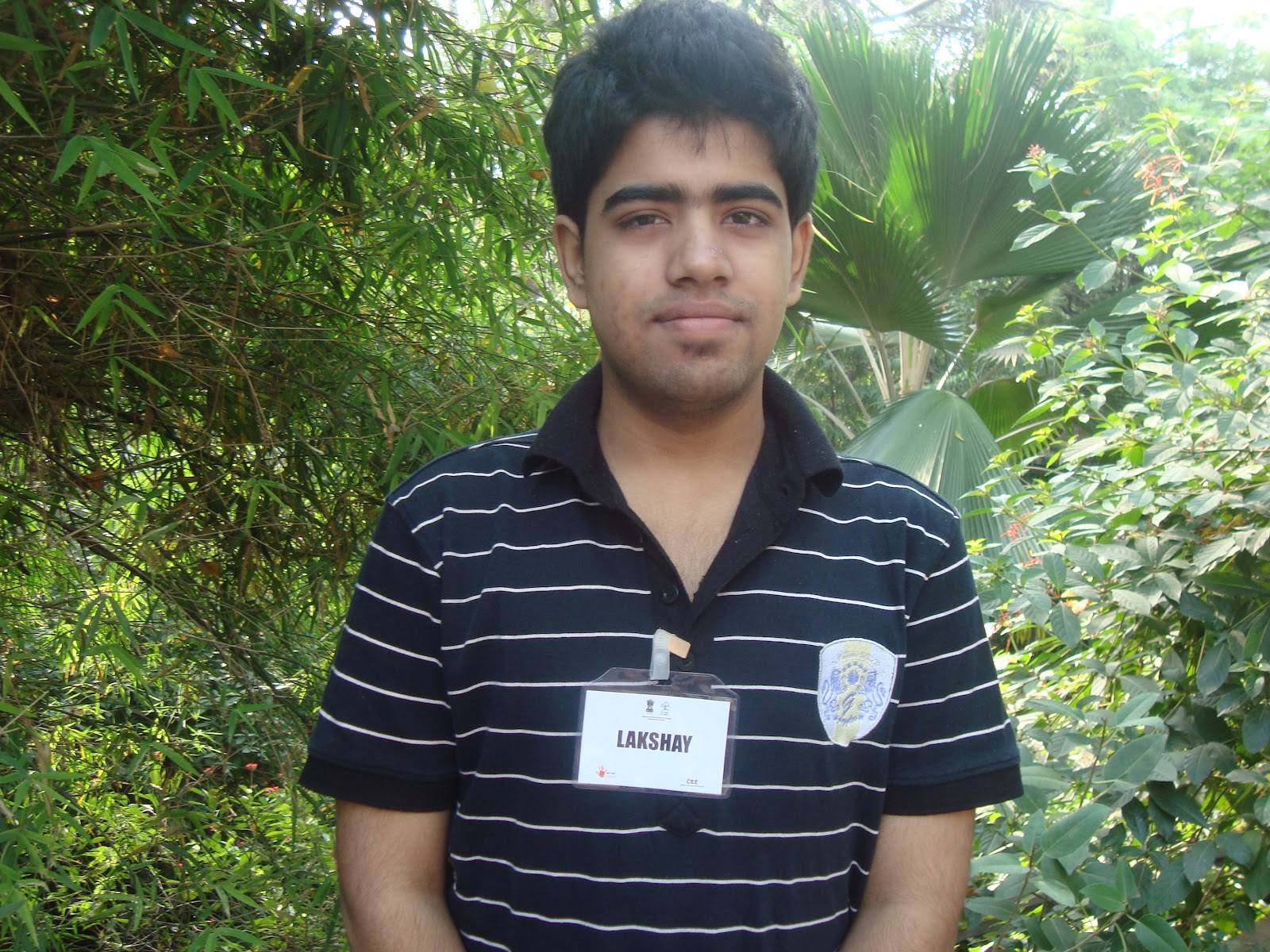
“It was our first day and so we did not understand everything that was shown to us but we gained a broad perspective of the ongoing conflicts and discussions. We do hope to learn much more in the coming days.” Lakshay Rastogi

2011-12 International years


2012 International Year of the Bat

The United Nations has declared 20112012 as International Year of the Bat and Bat Conservation International (BCI) as an International Year of the Bat Founding Partner.

The more than 1,200 species of bats - about one-fifth of all mammal species - are incredibly diverse. They range from the world’s smallest mammal, the tiny bumblebee bat that weighs less than a penny to giant flying foxes with six-foot wingspans. Except for the most extreme desert and polar regions, bats have lived in almost every habitat on Earth since the age of the dinosaurs.

Bats are essential to the health of our natural world. They help control pests and are vital pollinators and seed-dispersers for countless plants.Yet these wonderfully diverse and beneficial creatures are among the least studied and most misunderstood of animals.

For more information on bats and activities to get involved visit:
http://www.yearofthebat.org

2012 International Year of Sustainable Energy for All

Recognizing the importance of energy for sustainable development, the United Nations General Assembly has designated, by its resolution 65/151, the year 2012 as the International Year of Sustainable Energy for All.

The International Year of Sustainable Energy for All presents a valuable opportunity to raise awareness about the importance of increasing sustainable access to energy, energy efficiency, and renewable energy at the local, national, regional and international levels.

Energy services have a profound effect on productivity, health, education, climate change, food and water security, and communication services.

Lack of access to clean, affordable and reliable energy hinders human, social and economic development and is a major impediment to achieving the Millennium Development Goals.

Today, 1.4 billion people still do not have access to modern energy, while 3 billion rely on “traditional biomass” and coal as their main fuel sources.

With leadership from UN Secretary-General Ban Ki-moon, UN-Energy - a coordinating group of 20 UN agencies - is undertaking a new global initiative, Sustainable Energy for All.

This initiative will engage governments, the private sector, and civil society partners globally to achieve three major goals by 2030:
•               Ensure universal access to modern  energy services.
•               Reduce global energy intensity by 40  per cent.
•               Increase renewable energy use globally to 30 per cent.

For more information visit:
www.sustainableenergyforall.org


2012 as International Year for Cooperatives

The United Nations General Assembly has declared 2012 as the International Year of Cooperatives, highlighting the contribution of cooperatives to socioeconomic development, particularly their impact on poverty reduction, employment generation and social integration.

With the theme of “Cooperative Enterprises Build a Better World”, the Year seeks to encourage the growth and establishment of cooperatives all over the world. It also encourages individuals, communities and governments to recognize the agency of cooperatives in helping to achieve internationally agreed upon development goals, such as the Millennium Development Goals. The International Year of Cooperatives has three main objectives:
  • Increase public awareness about cooperatives and their contributions to socio-economic development and the achievement of the Millennium Development Goals
  • Promote the formation and growth of co-operatives among individuals and institutions to address common economic needs and for socioeconomic empowerment
  • Encourage Governments and regulatory bodies to establish policies, laws and regulation conducive to co-operative formation and growth.

For more information visit:
www.2012.coop

Celebration of our Living Culture - ACCU Asia/ Pacific ESD Photo Caravan comes to India

CEE is one of the international hosts of the ACCU Asia Pacific ESD Photo Message Exhibition titled “Letters to Tomorrow: Celebration of Our Living Culture”. As a part of this, CEE held the photo-exhibition in three cities - Ahmedabad, Jaipur and Pune.

In collaboration with partner agencies CEE organised a series of events to reinforce the importance of “living culture” in shaping our path to sustainable development. The exhibition focused to develop an understanding and respect for different cultures and traditions. It also provided an opportunity for critical reflection and dialogue with practitioners and interaction with community on culture, society and sustainability issues of not only conserving culture as a Heritage form but also about how relevant it is for us to perceive culture (role of human value system) as one of the significant element and mode of achieving
goals of Sustainable Development.

About 800 students visited the ACCU exhibition in Pune. Informal interaction with the students revealed that they not only enjoyed the exhibition but learnt a great deal about the similarities in cultural practices of ‘our neighbouring countries’.


The Photo Caravan is a collection of over 80 prize winning photographs from a photo contest organised by the UNESCO Asia Pacific Cultural Centre last year as part of the UN Decade of Education for Sustainable Development.

The photo caravan was exhibited simultaneously in three countries of Asia Pacific i.e. Mongolia, Japan and India. Day long events including interactive cultural exchange sessions with groups visiting the exhibition at all three venues in India.

For more information on the events in India visit:
www.desd.org


20th Anniversary of Basel Convention

17 November, Basel, Switzerland


The Basel Convention on the Control of Transboundary Movements of Hazardous Wastes and their Disposal celebrates the 20th Anniversary of its adoption on 17th November 2009. The treaty, which regulates the transboundary movements and management of hazardous and other wastes, was adopted in Basel, Switzerland, on 22 March 1989 and came into effect in 1992.

172 countries are signatory to the convention. Achievements of the convention in the past 20 years:
  1. By applying the “Prior Informed Consent” procedure the Basel Convention put in place a regulatory framework to control the transboundary movements of hazardous
    and other wastes. Only shipments between consenting Parties are legal and all shipments made without such consent are illegal.
  2. The Convention requires its Parties to ensure that hazardous and other wastes are managed and disposed of in an environmentally sound manner, including within their boundaries.
  3. In the past twenty years the Convention has seen the emergence of 14 Regional and Coordinating Centres for Training and Technology Transfer, in various parts of the world. The Centres support developing countries and countries with economies in transition in the implementation of the Convention.
  4. Over the years, the Basel Convention adapted to newly emerging problematic waste streams. In the area of e-waste, it has put in place successful partnerships with the private sector and NGOs.
  5. In 2008, the Convention launched the Partnership for Action on Computing Equipment, a multi-stakeholder partnership that provides a forum for to tackle the environmentally sound management, refurbishment, recycling and disposal of used and end-of-life computing equipment.
  6. The convention recognises the fact that many countries still lack the capacity to implement the Convention. As a result, illegal traffic in hazardous waste is still a reality.
  7. The Convention adopted Bali Declaration on Waste Management for Human Health and Livelihood. The Declaration specifically recognizes the implementation of the Basel Convention as an essential component of attaining the MDGs.
For more infromation visit:
http://www.basel.int/index.html

International Events

The 2009 G8 Summit
8 to 10 July, L’Aquila, Italy


The G8 summit is attended by eight of the world’s most powerful heads of government. 2009 saw representation from 90% of the world’s economy at the Summit from both emerging countries,
Africa and the main International Organizations. The main issues for discussion were:

  • a response to the global economic and financial crisis
  • restoration of grassroots confi dence and a boost to growth on a more solid and balanced basis, also through the defi nition of new, shared ground rules for economic activities
  • a focus on the social aspect of employment, to help the weaker sectors of society both in the industrially advanced countries and in the poorer countries
  • the struggle against protectionism and the deregulation of world trade for everyone’s benefit
  • the resolution of regional crises
  • food security and safety; and
  • the struggle against climate changes.
For more information visit:
http://www.g8italia2009.it/G8

4th South Asia Renewable Energy Conference
29th July 2009, New Delhi

The Conference aimed to promote renewable energy enterprise development by removing barriers that impede Renewable Energy use. Participants will be able to raise issues, exchange
information, share experiences and best practices. Participation is expected from experts, investors and other stakeholders for promoting renewable energy in our region at a large scale.
Organized by ASSOCHAM with support from the Government of India Ministry of New and Renewable Energy, ACME, TERI, CEE and GTZ and other partners.

For more information visit:
http://www.assocham.org/4asia/

‘Cities and Climate Change: Responding to the Urgent Agenda’
Urban Research Symposium, 28th June - 1st July 2009, France

‘Cities and Climate Change: Responding to the Urgent Agenda’ was the theme for the 5th Urban Research Symposium that took place in Marseille, France. The symposium was co-organized
by the World Bank, the French Ministry of Ecology, Energy, Sustainable Development and Town and Country Planning, and the French Agency for Development. The even brought together
over 600 participants from 82 countries and aimed at advancing the research agenda on climate change from a city’s perspective. The meeting focused on:
1. understanding and measuring how cities impact, and are impacted by,
2. climate change; planning effi ciently and effectively to increase the resilience of cities
3. improving management, coordination, and planning of cities to meet climate change challenges
4. understanding how and why cities respond to climate change
5. understanding and reducing vulnerability of urban populations to climate change

As a follow-up to the symposium, a handbook with practical applications of dealing with challenges of CC and cities targeting the decision makers and a collection of research papers are expected to be produced. The collection of research papers target academics and researchers. Both the publications emphasize policy implications, including mitigation and adaptation strategies, as well as new options for fi nancing policies and technologies.

For more information visit:
http://www.urs2009.net:80/

Seal the Deal Campaign
The UN-led Seal the Deal Campaign aims to galvanize political will and public support for reaching a comprehensive global climate change agreement in Copenhagen in December 2009. “Seal the Deal” campaign encourages users to sign an online, global petition to seal a fair, balanced and effective agreement on climate change.

This is planned to be presented by civil society to the governments of the world. UNESCO Director-General Koïchiro Matsuura and about 128 staff members have signed the “Seal the Deal” petition on 12th June, UNESCO Staff Day.

On December 7, when governments gather in Copenhagen, Denmark to respond to one of the greatest challenges facing humanity – climate change —the main question will be how protect the planet and create a green economy that will lead to long-term prosperity. Reaching a deal by
the time the meeting ends on December 18 will depend not only on complex political negotiations, but also on public pressure from around the globe.


For more information visit:
http://www.sealthedeal2009.org/


International Events


Mid-term Review of the UN Decade of Education for Sustainable Development
31st March - 2nd April 2009, Bonn, Germany


This conference Conference on Education for Sustainable Development represented UNESCO mid-term review of the UN Decade of Education for Sustainable Development. The conference was organized by UNESCO and the German Federal Ministry of Education and Research, in cooperation with the German Commission for UNESCO.


The conference brought together nearly 900 participants – including over 50 ministers and deputy ministers – to exchange best practices on Education for Sustainable Development and
implementation of the UN Decade of Education for Sustainable Development (UN-DESD) from all world regions. Key objectives of the conference included:
• highlighting the relevance of ESD to all of education;
• promoting international exchange on ESD, especially between the North and the South;
• carrying out a stock-taking of the implementation of the UNDESD; and
• developing strategies for the way ahead.


In addition, participants discussed regional, national, and cultural differences as well as challenges in the implementation of the UN-DESD. At the end of the conference, Member States adopted a declaration, referred to as The Bonn Declaration, reflecting the debates and proposing guidelines for the implementation of the UN-DESD in its second half.


For more information visit:
http://www.esd-world-conference-2009.org/en/home.html.


During this Conference an Earth Charter Special Event entitled ‘Integrating the values and principles of sustainability into education; the promise of the Earth Charter’ was held on
Thursday, 2 April 2009. This special event was built on the overall goal of the UN Decade on Education for Sustainable Development which seeks to integrate the principles, values and practices of sustainable development into all aspects of education and learning and on the 2003 resolution adopted by UNESCO which ‘recognizes the Earth Charter as an important ethical framework for sustainable development.’ A guide for using Earth Charter in Education was launched.


For more information on The Earth Charter visit:
http://www.earthcharterinaction.org


The Forgotten Priority: Promoting Gender Equality in ESD
Another event held at the same conference on 2nd April was ‘The Forgotten Priority: Promoting Gender Equality in ESD’. The event was a forum for participants to discuss activities, best practices, and challenges, and suggested recommendations in promoting gender equality in ESD. The discussions centered on the need to highlight synergies between gender equality and sustainability at the policy level and in educational practices. The conference ended with participants recommending following action plans to be implemented at the national and local level:
• raising awareness on gender roles and their impact as early as possible, starting preferably in early childhood education, so as to sensitize students’ later learning experiences;
• mainstreaming gender into ESD at all levels of education, especially into teacher training, teacher in-service training, and university lecturer training;
• and linking gender issues in ESD with the wider social context, including topics such as
• ethnicity, socio-cultural background, and race.


For more information visit:
http://www.esd-world-conference-2009.org/en/specialevents/
2-april-2009.html#c2126.


The Bonn Declaration stresses that Education for Sustainable Development needs to be based on values of justice, equity, tolerance etc. It also recognizes that the progress of ESD remains unevenly distributed and requires different approaches in different contexts.For full text visit: www.esd-world-conference-2009.org


5th World Environmental Education Conference
10-14 May 2009, Montreal


“Earth as our common home” was the vision for the 5th World Environmental Education Congress that was held from 10-14th May in Montreal. The Congress gave nearly 2,200 stakeholders from 106 different countries the opportunity to join forces in exploring new ways by which we can better live together in our schools and institutions, our neighbourhoods and businesses, our cities, towns and regions, in short, on Earth, our common home. It was a journey of discovery that allowed them to share knowledge on best practices, chart new and promising paths for political action and celebrate the plethora of approaches to environmental education.


For more information visit:
http://www.5weec.uqam.ca/EN/


International Events
International Years proclaimed by the United Nations General Assembly in 2008The UN has been designating International years since 1959.The designated ‘year’ draws attention to major issues andencourages international action to address concerns that haveglobal importance and ramifications. 2008 has been declaredas the international year for Potato; Sanitation; Languagesand Planet Earth.

2008 International Year of Sanitation
The UN General Assembly declared 2008 as the International Year of Sanitation (IYS) to put spotlight on Sanitation. The goal is to raise awareness and to accelerate progress towards the
Millennium Development Goal (MDG) target to reduce by half the proportion of the 2,6 billion people without access to basic sanitation by 2015. IYS focuses on five key messages
• Sanitation is vital for human health
• Sanitation generates economic benefits
• Sanitation contributes to dignity and social development
• Sanitation protects the environment
• Improving sanitation is achievable


The United Nations Department of Economic and Social Affairs (UNDESA) is the lead coordinating body for IYS.

For more information visit: http://esa.un.org/iys/ap.shtml

2008 International Year of Planet Earth
The International Year runs from January 2007 to December 2009, the central year of the triennium (2008) having been proclaimed by the UN General Assembly as the UN Year. The International
Year of Planet Earth aims to capture people’s imagination with exciting knowledge about our planet, and to see that the knowledge is used to make the Earth a safer, healthier and
wealthier place for all. The Year’s research themes are:
• Groundwater: reservoir for a thirsty planet?
• Hazards: minimizing risk, maximizing awareness
• Earth and Health: building a safer environment
• Climate change: the ‘stone tape’
• Resources: sustainable power for sustainable development
• Megacities: going deeper, building safer
• Deep Earth: from crust to core
• Ocean: abyss of time
• Soil: Earth’s living skin
• Earth and Life: origins of diversity


The International Year of Planet Earth is a joint initiative by UNESCO and the International Union of Geological Sciences (IUGS).

For more information visit: http://www.yearofplanetearth.org/

2008 International Year of Languages
On 16 May 2007 General Assembly proclaimed 2008 International Year of Languages, in an effort to promote unity in diversity, global understanding. IYL intends to address issues of linguistic
diversity (in the context of cultural diversity), respect for all languages, and multilingualism. United Nations Educational, Scientific and Cultural Organization (UNESCO) is the lead agency
for the Year. To celebrate the International Year of Languages, UNESCO invites governments, United Nations organizations, civil society organizations, educational institutions, professional
associations and all other stakeholders to increase their own activities to promote and protect all languages, particularly endangered languages, in all individual and collective contexts.


For more information visit:
http://www.un.org/events/iyl/index.shtml

2008 International Year of Potato
Recognizing the need to focus world attention on the role that the potato can play in providing food security and eradicating poverty, and in achieving internationally agreed development goals, including the MDGs, the United Nations General Assembly in December 2005, declared 2008 as the International Year of the Potato. Potato is the world’s No 4 food crop, after maize, wheat
and rice. The International Year of the Potato aims at raising global awareness of the potato’s key role in agriculture, the economy and world food security.
The potato has its origin in the Andes about 8000 years ago, where it was domesticated from wild plants near Lake Titicana - high in the Andes Mountains. They come in a very wide range of colours, shapes and sizes. The International Potato Centre in Peru has identified about 4300 different varieties of potato grown in the Andes. The top potato growers in the world in 2007 were:
1. China (72 million tonnes)
2. Russian Federation (37 million tonnes)
3. India (26 million tonne)
4. United States (20 million tonnes),
5. Ukraine (19 million tonnes)
6. Poland (12 million tonnes)
7. Germany (11 million tonnes)
Source: http://www.potato2008.org/en/index.html


International Events


COP 8 Convention to Combat Desertification
3-14 September 2007, Spain

The eighth session of the Conference of the Parties to the United Nations Convention to Combat Desertification (COP 8) was held in Madrid, Spain, from 3-14 September 2007.


The sixth session of the Committee for the review of the Implementation of the Convention (CRIC 6) and the eighth session of the Committee on Science and Technology (CST 8) was held in
conjunction with COP 8.


COP 8 discussed the draft ten-year strategic plan for the implementation of the United Nations Convention to Combat Desertification (UNCCD), the outcome of the International Year of Deserts and Desertification in 2006, preparation of the next session of the Committeee on Sustainable Development (CSD), and interactive dialogue sessions on the theme of ‘Desertification
and adaptation to climate change.’ The 10 year strategic plan for the implementation of the
convention was adopted by the Parties as a whole and decisions were agreed on as an annex to the plan.

For more information visit:
http://www.unccd.int/cop/cop8/menu.php


COP 13 Climate Change Conference
3-15 December 2007, Bali – Indonesia

The conference of the Parties (COP) on climate change meets every year to review implementation of Climate Change convention that came into being in 1994 and is ratified by 192 countries. The COP adopts COP decisions and resolutions, published in reports of COP. Successive decisions taken by the COP make up a detailed set of rules for practical and effective implementation of the Convention.


The 13th COP took place in Bali, and was hosted by the Government of Indonesia, between 3-15 December 2007. It brought together more than 10,000 participants, including representatives of
over 180 countries, with observers from intergovernmental and non governmental organizations and the media. The two week period included the sessions of the Conference of the Parties to
the United Nations Framework Convention on Climate Change (UNFCCC), its subsidiary bodies as well as the Meeting of the Parties to the Kyoto Protocol.


The major outcome of the conference was the adoption of the Bali Road Map. The Bali Road Map includes the Bali Action Plan, which charts the course for a new negotiating process designed to
tackle climate change, with the aim of completing this by 2008. It also includes AWG-KP negotiations and their 2009 deadline, the launch of Adaptation Fund, the scope and content of Article 9, review of Kyoto Protocol, as well as decisions on technology transfer and on reducing emissions from deforestation.


United Nations International Year for 2007
2007 Year of the Dolphin (extended to 2008)

The UN Convention on Migratory Species, together with its specialized agreements on dolphin conservation ACCOBAMS and ASCOBANS and the Whale and Dolphin Conservation Society,
declared 2007 the Year of the Dolphin. The Year of the Dolphin campaign focuses on raising awareness of dolphins in the wild, the threats they face to their survival and actions that could help with their conservation and the protection of their habitats and ecosystems. In 2008, the campaign will keep educating and raising awareness, while also focusing on the support of select conservation projects chosen by international experts on cetacean conservation.


For more information visit:
http://www.yod2007.org


2007-2008-(2009) - International Polar Year
The International Polar Year (IPY) is a large scientific programme focused on the Arctic and the Antarctic from March 2007 to March 2009.


IPY, organized through the International Council for Science and the World Meteorological Organization, is the fourth polar year, following those in 1882-3, 1932-3, and 1957-8. In order to have full and equal coverage of both the Arctic and the Antarctic, IPY 2007-8 covers two full annual cycles from March 2007 to March 2009 and will involve over 200 projects, with thousands
of scientists from over 60 nations examining a wide range of physical, biological and social research topics.

For more information visit:
http://www.ipy.org


International Heliophysical Year 2007

The objectives of IHY are to discover the physical mechanisms that drive the coupling of Earth’s atmosphere to solar and heliospheric phenomena. The systematic global study of this interaction is to be the central theme of IHY. In view of these aims, the objectives for IHY are: provide benchmark measurements of the response of the magnetosphere, the ionosphere, the lower atmosphere and Earth surface to identify global processes and drivers which
affect the terrestrial environment and climate;


  • global study of the Sun-heliosphere system outward to the heliopause to understand the external, and historic drivers of geophysical change;

  • foster international scientific cooperation in the study of heliophysical phenomena now and in the future

  • communicate the unique scientific results of IHY to the interested scientific community and to the general public.

For more information visit:
http://ihy2007.org/