Showing posts with label Vol.17.2011-12. Show all posts
Editorial

Changes are taking place in the School EE scenario in the country. In Dec 2010, the matter of the writ petition no 860 filed by Shri MC Mehta in 1991 was deemed to have been put to rest by the Supreme Court. In response to the writ petition, the Supreme Court had directed in Nov 1991 that EE should be compulsory at all levels of education. The latest decision, which is an acceptance of an Affidavit submitted by NCERT, now directs all school boards to follow the infusion approach for EE. However, concerns have been raised by the Minister of State, Environment and Forests about the need to strengthen infusion processes and to provide exclusive time and space for EE in the time table. How the infusion approach will play out in the curricula of various state boards also remains to be seen.

This issue of Education for Change brings you a few different perspectives on school EE, from the points of view of policy makers, as well as practitioners.

A recent review of the ENVIS centre on EE by Dr Nilkanth Ghosh, Statistical Advisor, ENVIS Secretariat has led us to bring you this Annual publication of Education for Change. It has been suggested that the newsletter should be sent out as electronically periodically, and selected content be published in print form. We look forward to readers’ suggestions and feedback. 

"Environmental information is a critical input to decision makers, policy planners, scientists and engineers, research workers, teachers and citizens of this country.The word environment itself conjures myriad images in our mind. It is a broad-ranging, multi-disciplinary subject.
ENVIS basically caters to the needs of stake holder by disseminating information in
printed or numerical form.
To put together a comprehensive information system on environment would necessarily require effective participation of various organizations that are actively
engaged in work relating to different subject areas of environment.
CEE, the ENVIS centre for Environmental Education would be of great value to
all stake holders including teachers and learners! I appreciate CEE’s ENVIS work andwish it success.”
Shri Nilkanth Ghosh
Statistical Advisor
ENVIS Focal Point, Ministry of Environment and
Forests, Govt. of India
Environment Education in the School Curriculum

Sanskriti Menon, Centre for Environment Education

Over the last few years, environment education in the formal school curriculum has been influenced by two national policy documents: the National Curriculum Framework 2005 of the National Council of Educational Research and Training (NCERT) and the directive of the Supreme Court in response to a 1991 petition filed by Shri M C Mehta. The Supreme Court gave its final pronouncements on the matter of the writ petition in December 2010.

The key document illuminating the way forward for EE in the formal school system, as approved by the Supreme Court, is the Affidavit filed by the NCERT and which advocates the infusion approach. This means that an environment perspective is to be added to all subjects, from Standard I to XII. (See interview with Dr Jaishree Sharma, NCERT)

There are many advantages to the approach, since EE draws from the different subjects of science, social studies, maths, language, art etc. However, experts and practitioners point out a number of constraints as well, the main one being the lack of opportunities for synthesis of the learning that may take place in different subjects. Another major constraint is the lack of a common course at the XI and XII level which is taken by students of all streams into which the core content could be infused. This may necessitate a separate subject of 50 marks at the XI and XII level.

A letter dated 15 March 2012 from Ms Jayanti Natarajan, Minister of State for Environment and Forests to Shri Kapil Sibal, Minister, Human Resource Development, highlights the need for careful infusion as well as exclusive time and space in the school time table for EE. (see box) 

Dr Erach Bharucha, Director, Bharati Vidyapeeth Institute for Environment Education and Research agrees, “The infusion approach should continue as it is. In addition, there is an absolute need for a separate time and space for EE and ESD as a separate core module with its own curriculum, textbook, and exam system so that it is given the same sanctity and weightage that other major subjects are given today.”

According to Dr Jaishree Sharma, NCERT, infusion has been done carefully and systematically in the latest set of textbooks developed after the National Curriculum Framework, 2005. Key steps were orientation of textbook writers to the syllabus for EE that they needed to infuse and, after the textbooks were developed, a report of the content infused.

It remains to be seen how the different State Education Departments are able to implement the infusion approach. Given the importance of textbooks in Indian schools as the primary teaching aid, there is an enormous scope and need for some very creative textbook writing efforts that meet the challenge of infusion of environment and sustainability perspectives into subjects.

Dr Jayashree Bahulikar, member of the Board of Studies for EE of the Maharashtra State Board of Secondary and Higher Secondary Education says, “We have been working over the past few months with the Boards of Studies of the different subjects. In this process we find that textbook writers typically feel that they already carry environment related content, such as poems and lessons on the beauty of nature. Firstly, they need to understand that the infusion now required to be done has to be of specific topics of the EE syllabus approved by the Supreme Court. Secondly, the traditional approach of textbook writing has to change. The idea is not only to provide information but to help students construct their own learning which is emphasized in the NCF 2005 as well as the State Curriculum Framework 2010 in Maharashtra. The textbooks thus need to help the students learn by doing and build upon the students’ experiences and knowledge. Thirdly, teacher training that takes place to orient about the new textbooks will also need to highlight the EE content in the different subject text books. Otherwise the point of infusion will be lost.”

Shri BMS Rathore, Joint Secretary, EE Division, MoEF, sees a lot of synergy between the efforts of the MoEF and MHRD for EE. (See interview with BMS)

Ultimately, the objective is to help students develop appropriate competencies for taking steps towards sustainability. For this, teachers need adequate capabilities for Education for Sustainable Development. These two critical aspects need to remain central to the efforts of all concerned agencies, even as the discussions continue on marks, grades, and time table space.

Need for ‘Exclusive Time and Space for EE’ in addition to Infusion Approach

Excerpt from a letter dated 15 March 2012 from Ms Jayanti Natarajan, Minister of State for Environment and Forests, to Shri Kapil Sibal, Minister, Human Resource Development, Government of India. 

“The infusion approach, in the absence of focused attention on Environment Education (EE) may lead to dilution of focus. Past experience shows that the EE in schools through infusion approach has only worked in cases which brought in some influences that had been external to the regular curricular teaching, and were focused specifically on EE. Studies that involved questioning teachers across the country on infusion approach to EE have shown that ownership for EE with subject teachers remains weak. The EE has often been taught in a completely fragmented way, in isolated and unconnected project-based activities in different subjects. Also, the assessment of EE under the infusion approach has remained problematic. The schools may continue to measure the EE content in the same cognitive manner, as they measure other subject contents, thus defeating the very purpose of EE.

This however does not mean that the infusion approach is to be abandoned; on the contrary there is an urgent need to provide for strengthening of the infusion approach, where content on Environment in different subjects could be dealt meaningfully. Exclusive time and space needs to be built in the school time table to translate the EE content into the EE experience, using project work, observations, and going out in nature, thus allowing learning beyond the confines of text books. A separate period to integrate the teaching and learning of infused content therefore is required. This would in-fact provide for an integrated and inter-disciplinary learning experience, that draws up on the infusion and other skills learnt through different subjects. Measures need to be developed to determine the adequacy of infusion and projects, quality of teaching and learning. The strategy to succeed needs capacity building of the whole school through trainings and materials.

The MoEF has key stake in EE, with more than 27 years of experience that has engaged state Nodal Agencies, Centres of Excellence and various associated expert institutions. It has a stake in keeping the priorities of environment and sustainable development at the core of education systems in order to keep the citizens aware of the concerns and actions required to resolve them. MoEF may continue to provide the expertise gained over the years, particularly with school systems, through programmes like Environment Education in the School System (EESS) and Strengthening Environment Education in the School System (SrEESS). The EESS targeted capacity building of teacher trainers, textbook writers and curriculum development. The flagship programmes of the MoEF like National Green Corps (Co-curricular Eco Club approach), offer great insights and opportunities to support universalization of EE.

The experience of MoEF in Environment Education, developed along with its Centres of Excellence, State Nodal Agencies and other institutions, can come to the fore to strengthen HRD Ministry and the NCERT in implementing the directives of the Hon’ble Supreme Court in letter and spirit.

I would therefore urge that the infusion approach to Environment Education be taken with utmost care. 
 
I assure you of my Ministry’s utmost support in treading a different path. This would go a long way in building up a leadership of children and youths on environmental issues that we face in the country.”

The NCERT Approach

Dr Jaishree Sharma, Nodal Officer for Environment Education at NCERT provides an overview of the steps taken by NCERT to enhance the implementation of environment education in the school system.


EfC: What are some of the developments that have shaped the nature of Environment Education (EE) in the formal school curriculum?

Dr Jaishree Sharma (JS): Environment Education has been a part of the school curriculum for several years. The National Policy on Education 1986 itself emphasized Environment as one of the ten core areas of education. As regards methods too, teachers know the importance of experiential learning which is emphasized in the literature on EE. However, the public interest litigation by Shri M C Mehta and the subsequent directives of the Supreme Court have helped in two ways. Firstly, attention of the public at large, teachers, parents and students has been drawn to EE. And secondly, it has helped us structure the implementation of EE in formal education. There is now an agreed upon approach, syllabus and materials for EE that have been published by the NCERT. (See box 3 ‘Supreme Court Order on EE’ for details)

EfC: What is the new approach to Environment Education in the School Curriculum?

JS: The key document encapsulating the approach for implementation of EE in the school curriculum is the Affidavit which was submitted to the Supreme Court in 2007 and which was finally accepted by the Supreme Court in Dec 2010. The main elements are infusion of EE concepts in all subjects, compulsory evaluation of EE content with at least 10% of the total marks devoted to EE content, no written exam in XII standard, and major emphasis on project-based learning. Following the acceptance of the Affidavit, the NCERT has published in 2011 the ‘Handbook on Environmental Education’ which provides source material for the core course at the XI and XII standard levels. Project books have been developed for Standards VI to X. Each student is expected to carry out at least two projects every year, and the whole class can carry out at least 20 different projects.

EfC: What are some of the steps taken by NCERT to promote the new approach to EE?

JS: Following the NCF 2005, at NCERT when the textbooks were being developed, a workshop was held to orient textbook writers to the approach to EE and the syllabus. Detailed discussions were done on how infusion may take place. Subsequently, a report was prepared on how the infusion has been done. 

NCERT has written to all state boards to update about the new approach accepted by the Supreme Court. A number of meetings and workshops have been organized where the new approach has been presented, as well as the way NCERT itself has adopted this approach. It is recommended to state boards that they should provide orientation to textbooks writers about EE and then, after the textbooks are developed, prepare the report on infusion.

Each state has been requested to identify nodal officers at the state and district level such as in DIETs. In addition, it has been suggested to the nodal officers that they should try and identify experts and others experienced in the project-based learning method for EE who can function as volunteers and provide guidance to teachers in the new approach to EE. These experts may be from universities, NGOs etc. 

Proposals have also been invited from all states for translation of the project books into the local language as well as production and dissemination to all schools.

EfC: While a structured approach has been developed, what are some of the issues of concern in imparting EE in schools?

JS: The structured approach initially was aiming at development of awareness about environmental issues as desired by the Hon’ble Supreme Courts’ directive. But looking at the true spirit of the PIL 860/1991 and the directives of Hon’ble Supreme Court of India – the main objective of EE as per NCF-2005 is to bring about attitudinal changes amongst children. Through the present project based infusion approach the transaction of EE related curriculum it is envisaged that like the attainment of environmental awareness the pro-environmental attitudinal changes may also be achieved over the time. A large number of studies are there in support of this.

EfC: In what way can NGOs, especially those running eco-club prgrammes, support the implementation of this approach to EE in the formal curriculum?

JS: The eco-club programmes that are the MoEF sponsored NGC programme is one such step where the students are engaged in projects which have direct bearing to the environmental concerns. Of course NGC programmes are spearheaded by Centres of Excellence of MoEF, the Pollution Control Board etc. Further, MHRD through the formal educational system also aims to boost this effort of MoEF. A synergy is being attempted to be achieved between the tasks of MoEF and MHRD by awarding NGC programmes ( which provides a grant of Rs. 2500/- to the schools annually) to those schools which encourage their students to take up relevant environmental projects.

Box 1
New Approach to Implementation of EE as per NCF-2005

The NCERT has recommended the following implementation approach in the context of EE (which are described in the Affidavit to the Supreme Court, and accepted)

  1. Classes I and II – EE concerns are transacted through activities.
  2. Classes III to V – EE is being imparted through a subject namely EVS (Environmental Studies)
  3. Classes VI to X – Follows infusion approach for EE. 10 percent of assessment of grand total is based on EE besides project and field work in separate time carved out from existing timetable.
  4. Classes XI and XII – Besides infusion in electives. A separate compulsory course 50 marks based on core syllabus and projects work is for all. Marks to be refl ected/ added to the total marks. Time to be carved out of existing time table (such as time allocated to general studies) table.

Box 2
Issues to Consider for Strengthening EE

The whole exercise of the PIL, the NCERT Affidavit and the Supreme Court Ruling has probably served to enhance the scale of discussions on environment education in the country. A syllabus, project books, textbooks, training courses etc have been prepared by NCERT and Education Depts. and others in various states over the last few years. However, with the final Ruling, some issues such as the following must be considered, and discussions should continue on how to integrate sustainability thinking into education:

a.     In Std VI to X, Project Assessment of EE projects would be 10% of the marks allocated for practical / projects in Science and Geography. This means that if 20 marks are allotted, then each student would have to undertake two EE projects that would be assessed for just 2 marks.
b.    In several states, unlike in CBSE schools, there is no subject like General Studies at XI and XII level which is common to all streams. A separate compulsory subject may be needed at this level to transact the core component.
c.     In XI and XII, the method of seminars may not be practical in large class sizes.
d.    The capacity of teachers to organize projects based learning needs strengthening.
e.     Around the world (and in India), there are advances in thinking about Education for Sustainable Development, and ideas such as the whole school approach which can build upon the impetus provided by the Supreme Court Ruling.


Box 3
The Supreme Court and Environment Education Sequence of Events

Writ Petition, 1991
In 1991, Shri M C Mehta fi led an application in the public interest (Writ Petition (Civil) No. 860 of 1991), asking the Supreme Court to:

• Issue direction to cinema halls that they show slides with information on the environment;
• Issue direction for the spread of information relating to the environment on All India Radio; and
• Issue direction that the study of the environment becomes a compulsory subject in schools and colleges.

The consequent order of the Supreme Court dated 22 Nov 1991 is available at http://tinyurl.com/SCandEE

Directive to NCERT to Prepare EE Syllabus, 2003
On 18th December 2003, the Hon’ble Supreme Court further ordered, “We also direct the NCERT….to prepare a module (model) syllabus”, and directed that

“We accept on principle that through the medium of education awareness of the environment and its problems related to pollution should be taught as a compulsory subject. The University Grants Commission will take appropriate steps immediately to give effect to what we have said, i.e. requiring the Universities to prescribe a course on environment. So far as education upto the college level is concerned, we would require every State Government and every Education Board connected with education upto the matriculation stage or even intermediate college to immediately take steps to enforce compulsory education on environment in a graded way.”

NCERT developed a graded syllabus for Environment Education for 1 to 12 standards, which was accepted by the Supreme Court (the syllabus has subsequently been revised for Standards XI and XII) to incorporate contemporary environmental issues.

Appointment of NCERT as Nodal Agency for EE, 2004

On 13th July 2004 the Supreme Court directed that “the syllabus prepared by the NCERT for Class I to XII shall be adopted by every state in their respective schools”. It further directed that “NCERT be appointed as a nodal agency to supervise the implementation of this Court’s order”. Compliance to Supreme Court order is mandatory and desirable, and applies to all states and Union Territories (in fact, it is one of the few things that apply to education uniformly all over India).

EE and the National Curriculum Framework, 2005

In 2004 MHRD set up a nationwide process towards the development of the National Curriculum Framework 2005. This included the setting-up of a national steering committee and 21 national focus groups. One of these was a Focus Group on Habitat and Learning. In substance and spirit, this group was to look into the area of EE. The group delineated the objective as, ‘The main focus of EE should be to expose students to the real-life world, natural and social, in which they live; to enable them to analyze, evaluate, and draw inferences about problems and concerns related to the environment; to add, where possible, to our understanding of environmental issues; and to promote positive environmental actions in order to facilitate the move towards sustainable development.’

The Group recommended a systematic infusion of components of EE into the curricula of all disciplines while ensuring that adequate time is earmarked for pertinent activities.

The NCERT prepared its new syllabi and textbooks in accordance with the NCF 2005.

NCERT Affi davit, 2007
The NCERT submitted an Affidavit in October 2007 to the Supreme Court describing the spirit of the NCF 2005 and clarifying that to have compliance with the earlier order of the Supreme Court, a separate subject for EE is not a necessity. It can be done through infusion, in science, social studies, mathematics, language and other subjects, and/or through a separate subject. It does however have to be part of the compulsory curriculum.

This Affidavit is a key document outlining the sequence of relevant events subsequent to the PIL up to the proposal for how EE may be transacted from Standards I and XII. It was drafted after detailed discussions between the petitioner (Shri MC Mehta), the respondent (NCERT), and the experts appointed by the petitioner and NCERT.

Acceptance of Affidavit, Dec 2010
The Affidavit was accepted by the Supreme Court on 03 December 2010 and the writ petition WPC 860/1991 has been disposed off. Now, all school education boards are expected to follow the approach to EE described in the Affi davit. NCERT is coordinating the effort to enhance implementation EE in the spirit of the NCF 2005 as it is the basis of the affidavit.

For more information contact:
Dr. Jaishree Sharma
C-II/2039, Vasant Kunj, New Delhi – 110 070
Ph: 011-26850982
E-mail: jaishreesharma1@gmail.com

Environmental Education and Training
Ministry of Environment and Forests, Govt of India

Shri BMS Rathore, IFS is the Joint Secretary in charge of the EE Division of the Ministry of Environment and Forests. This Division supports one of the largest, if not the largest, school-based non formal Environmental Education programme in the world, the National Green Corps. Shri Rathore shares the vision of the EE Division for the coming years in an interview with Sanskriti Menon, Editor, Education for Change.


What are some of the signifi cant achievements of the EE Division?

The National Green Corps (NGC) and the National Environmental Awareness Campaign (NEAC) have been two massive outreach programmes. Over 10,000 organizations participate every year in the NEAC for awareness on different themes and the NGC engages about 100,000 school eco clubs every year in co curricular activities. These two schemes provide a huge platform which we can use for moving into much more well coordinated actions for environmental improvement and conservation. 

The two centres of excellence – CP Ramaswamy Environment Education Centre and the Centre for Environment Education – which are supported by the MoEF have been doing considerable innovative work in diverse fields in a locale specific manner. Their work ranges from sacred groves and natural heritage conservation to working with industries, urban and rural communities, youth etc. The combined efforts through the NEAC, NGC, and the centres of excellence, the Resource Agencies for NGC and the State Nodal Agencies result in outreach to several lakh people every year.

What is the vision of the EE Division for the coming years? 

An appraisal of the Environment Education, Awareness and Training Scheme of the MoEF was done recently. Using the inputs from this appraisal, we have put together a new strategy in which the EE Division aims to work closely not only with other divisions within the MoEF but also with other ministries, such as Ministry of Human Resource Development, NCERT, Urban Development, Energy and others.

As we move into the 12th Plan period, the EE Division will be taking the lead to reach out to them. The idea is to make communication and education an integral part of the programmes in these sectors. 

The other aspect is the need to significantly scale up the reach of the EE Division’s programmes. While the outreach of NEAC, NGC etc is quite large, the section they don’t reach is much larger. The Planning Commission is also supportive of the idea of enhancing the coverage of EE programmes. 

We are also seeing a very important role of EE in the implementation of the Green India Mission, which is one of the missions under India’s National Action Plan for Climate Change. The implementation of the Green India Mission will start soon, as we move into the 12th Plan period. 

What is the role of MoEF in facilitating EE with MHRD and NCERT?

There has been progress made by MHRD in making EE part of the curriculum. Following the National Curriculum Framework 2005, the NCERT has advocated the infusion approach which the Supreme Court has accepted. The preparation of a syllabus for EE and other materials in the last seven eight years have helped. However, MoEF believes that infusion alone will not be enough. It is not a question of either infusion or separate subject; in fact we should certainly have infusion and all subjects must reflect environment and sustainability concerns. But it is essential to also have a separate time and space in the time-table where the learnings from different core subjects are brought together and environmental understanding can be synthesized. MoEF is taking this very seriously at the Ministerial level and has initiated high level discussions with MHRD.

The MoEF has in fact contributed to the evolution of this thinking.Through the Environmental Education in the School System (EESS) project implemented by the MoEF from 1998 till 2003, for which CEE was the national consultant, a detailed study of the nature of infusion was done by BVIEER and other partners. This was followed by an initiative with 15 states for preparation of textbooks with infused EE content. The capabilities and experience developed in the centres of excellence and other partners should be very useful in further evolving the approaches for school-based Environment Education. The NGC experience of course can offer many learnings and case studies for project-based learning which the NCERT is advocating. We see a lot of synergy between the efforts of the MoEF and MHRD for EE. 

What about support for EE and ESD research? 

Now, with the greater understanding that the recent appraisal of the EE scheme of the MoEF has given us, as well as recommendation of working groups that Ministry had set up to provide further impetus to EE, we do hope to put in place some research on EE and ESD. This will be especially important as we align the work of the EE Division with that of other divisions of the MoEF and other Ministries. 

EE and ESD programmes need to be designed carefully to lead to transformation of society and so it is important that we are able to see what is working, what the barriers are, etc. Such research can also help identify systemic difficulties in programme implementation, which can be a valuable contribution in our development strategies. The view about EE that it is for ‘beneficiaries’ also has to change, it is important for all segments of society.

Areas of Work of MoEF’s EE Division

The Ministry of Environment & Forests (MoEF) is the nodal agency in the administrative structure of the Central Government for the planning, promotion, co-ordination and overseeing the implementation of India’s environmental and forestry policies and programmes. The primary concerns of the Ministry are implementation of policies and programmes relating to conservation of the country’s natural resources including its lakes and rivers, its biodiversity, forests and wildlife, ensuring the welfare of animals, and the prevention and abatement of pollution. While implementing these policies and programmes, the Ministry is guided by the principle of sustainable development and enhancement of human well-being. The broad objectives of the Ministry are:
      Conservation and survey of flora, fauna, forests and wildlife
      Prevention and control of pollution
      Afforestation and regeneration of degraded areas
      Protection of the environment and
      Ensuring the welfare of animals

The Environment Education Division or EE Division of the MoEF has the following objectives:

o   Development of educational/teaching materials and aids in the formal 
o   education sector
o   To encourage non-governmental organisations, mass media and other concerned organizations for promoting awareness among the people at all levels
o   To promote environment education through existing educational/scientific/
o   research institutions
o   To ensure training and manpower development in environment education; and
o   To mobilise people’s awareness for the preservation and conservation of 
environment

The programmes conducted/initiatives launched as part of this scheme are categorised under Formal and Non-Formal sectors. Programmes under Formal Environmental Education are:
      Environment Education in School System
      Environmental Appreciation Courses
      Environmental concepts in Management and Business Studies

Programmes under Non-Formal Environmental Education are:
            National Environment Awareness Campaign (NEAC)
            Eco-clubs (NGC)
            Global Learning and Observations to Benefit the Environment (GLOBE)
            Mass Awareness

For more details on these programmes, schemes and guidelines, please visit the webpage on the EE Division http://moef.nic.in/modules/divisions/ee/ 

For further information, please contact: 

Environment Education Ministry of Environment & Forests,
Government of India Paryavaran Bhawan,
CGO Complex, Lodi Road New Delhi - 110 003
Phone: +91-11-24367664, 24364593


Small Steps Towards a Greener Future


Sharmila Deo and Poornima Phadke, Kalpavriksh

Our hearts soared when a little schoolboy ran towards us with a metallic green wood-borer in his hands and displayed it proudly, taking immense care not to injure or let it fall when other boys crowded around it.

They were quick to point out its antennae and checked whether it indeed had two pairs of wings and three pairs of legs!

This was soon after we had seen a film on insects screened in their classroom.

During discussions about various insects, some children had sheepishly admitted that they did enjoy tying strings to dragonflies and whirring them around. In fact, the dragonfly was known to them as the “Helicopter!” After learning a little more about insects, the children promised to forgo the ‘Helicopter game’ totally, as it eventually harms the insect, very often, fatally.

Though such immediate attitudinal changes are extremely rare, we like to think that this reaction was a result of a session on Insects, as part of the environment education programme that we have now been conducting for over three years in the Bhimashankar area in western Maharashtra.

Sustained intervention was needed

The idea took seed when Dr Parihar, the then Chief Conservator of Forests, expressed a need for sustained intervention in the Bhimashankar sanctuary area. He shared various issues linked to the sanctuary which included conservation, livelihoods, and education. Among the local communities, it was observed that the children are most affected and influenced by the rapid social, economic, and cultural changes the area is undergoing. The current education system has not been able to address the complex situation the children are in, that of living in forest areas, but faced with new aspirations. There is a disconnect between the local contexts and school curricula.

A holistic approach which looked at bridging this gap, along with village empowerment through awareness and capacity building resulted in two programmes, an Environment Education programme and a Conservation and Livelioods programme.

The approach and content of the environment education programme was discussed within Kalpavriksh members and since Kalpavriksh has developed and conducted locale specific environment education programmes (for Lakshadweep, BRT Hills, Karnataka and Ladakh) there was a lot of learning and experience to draw upon.

We started with an assessment of whether school principals of those areas really felt there was a need for an environment education programme. After having a discussion with them at the Tribal Department during their monthly meet where they filled up a questionnaire, there was a unanimous agreement that the children should be exposed to it.

An advisory team was formed within Kalpavriksh and we requested Poornima Phadke to join the programme. Poornima has been conducting many environmental sessions with children of Pune. 

Municipal schools for over 12 years. Her teaching experience and a good hold over the local language proved useful for the programme. Permissions were sought from the Tribal department for starting the programme in the schools, and Concern India Foundation and Ruffords Small Grants supported it financially. The programme began in 2008 with the students of Grades 7 and 8 in the schools for tribal children in Tokawade and Terungun villages.

Approach 

A series of thematic workshops were planned, with a focus on awareness of the biodiversity present around their school premises, and within the sanctuary.

We started with topics most relevant to their daily lives – forests around their villages, the fauna and flora present there, rivers, streams, slowly moving onto other ecosystems which are different from theirs, and how everything together makes up the environment.

We avoided the use of technical terms as far as possible, but tried to bring in the concepts through simple examples. For example, the concept of ‘sustainability’ was explained by discussions on honey extraction and how better practices of harvesting could ensure that there is least harm being caused to the bees, as compared to the practice of causing a fire at the bottom of the hives. Similar interactions were held over topics of water, fuel wood, medicinal plants extraction, etc. Other than the activities and posters that we had produced, we also showed films, slideshows, did art and craft sessions, outdoor games etc.

It took us a while to break the ice, as we realized that these children had little exposure to outsiders. There was a lot of hesitation to talk or respond as they had mainly interacted with their teachers and co-students on a daily basis, and their communities when they went home during vacations. 

With time and experience we realized that not only were we ‘new’ people, but also spoke their language (Marathi) differently from theirs. The dialect, the vocabulary, was something that they were not used to. 

However, after a few sessions, we began to comprehend each other and the enthusiasm in the children began to show. 

Plant activity

These are pictures of various species of plants – trees, shrubs, herbs, creepers found in and around the sanctuary. Most cards have photos of the entire plant, and close-ups of leaves and fruits/fl owers. Some are commonly found, whereas some are rare. Some are used for their medicinal properties, other for fodder, and building. Some are ecologically important for insects, birds, etc.

Information of each plant is printed behind the card.
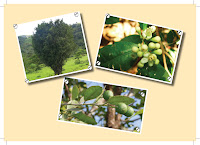
The children are divided into small groups and each group is shown a card. They have to try and identify the plant without turning it around. They also share any information they might know about it.

This activity can be done with individuals too.

The objective is to familiarize children with the flora in and around their forests and villages.


Development of Teaching Material
Materials such as posters, cards, activity sheets, etc. were developed to aid various topics.
Although it is an excellent idea that the children and educators both use their innovative skills and develop material from whatever scarce resources might be available, it cannot take away from the fact that unlike in urban setups, these children really have extremely poor resources, and very little exposure outside of their areas.

The excitement and motivation that is created amongst the children whilst handling visually and content-wise interesting material makes it worth it.

Local involvement

A conscious decision taken for this programme from its inception was to train local youth to conduct the programme with the children. This was to ensure continuity of the programme after our intervention would cease. This was a part of our exit strategy for the programme. The educators get an honorarium for handling the workshops, thus adding to their livelihoods.

Separate trainings and field trips are conducted to strengthen their knowledge base. A big challenge that we face is to find and retain local educators for the programme. The ones that we inducted either had different capacities and were not enthused by the role, or had to move out eventually for further education or more lucrative job opportunities. At the time of writing this piece there are 2 persons, Chandrakant Langhiand Subhash Dolas, who have worked on the programme for over a year, and committed to at least another year.

Workshops

Each workshop generally lasts for 2-3 hours, and is conducted by the local educators with support from KV members. It is a mix of activities based on some selected topic. For example, when we were discussing Birds, we did a slideshows on birds found in the area, followed by an outdoor trip conducted by an expert from Pune. The children were fascinated when he did his birdcalls, and a couple of times heard the Iora call back!

There was a quiz later on what they had seen and most of them drew the birds they had come across. They solved a crossword and played a card game called “Find my Mate”. Every workshop is eagerly looked forward to by the children as it is also a change from the monotony of classroom lectures.
When children visit homes during their vacations, they are encouraged to have dialogues with their community members on various aspects of biodiversity – be it the use and availability of medicinal plants, or local breeds of cattle, changes in cultivation patterns or any other topic which gives an idea into the pattern of an earlier lifestyle, and facilitates exchange between the traditional knowledge within the community, and the current situations on ground.

Local Action

One of the biggest environmental issues in Bhimashankar is of the indiscriminate use and disposal of plastic in the sanctuary. Since one of the 12 prominent ‘jyotirlingas’ of India is located here, around the time of ‘Mahashivratri’ there is an influx of pilgrims. Later, a huge amount of waste remains behind in the area.

It was around the time of the festival, that the children from Terungun and Tokawade Ashram schools wrote a letter to the District Collector and other officials requesting them to implement the plastic ban within the sanctuary. They made paper bags and sent them along with the letters as a symbolic gesture for adopting alternatives. There was no response to their letter, nor was any action taken at the temple site.

After a few days, the Tokawade children wrote a follow-up letter to the same officials, and demanded a response this time. The timing of the letter coincided with the ‘Shravan’month, when again pilgrims arrive in huge numbers. The children said in their letter that they would organise a ‘morcha’ if there is no response from officials.

The Chief Conservator of Forests, MK Rao, acknowledged receiving both the letters, and has responded to them. In a meeting with Mr. Rao, he mentioned that he has already started discussions with various stakeholders in Bhimashankar like the Temple Trust, community members, shop owners etc to put a garbage disposal system in place. It was encouraging to know that the children’s consistent follow-up has resulted in some action starting off, however long the result may take.

Future

The programme has now been extended to 2 other schools, one primary (Yelavli village), and the other secondary (Bhorgiri village).

We have started working on a simple handbook in Marathi which talks of the biodiversity and its conservation focusing on the Sahyadris, to be used by teachers, educators, and interested students.

The handbook is aimed to be used as a tool to conduct more such programmes in other schools through liaison with the Education / Tribal department, and other NGOs or institutes working with children.

For more information contact:

Kalpavriksh, Apt 5, Shree Dutta Krupa,
Deccan Gymkhana, Pune 411004
Ph: 020 25654239